
Area Rug – Sand & Wood Squares
US$750 – US$5,400Price range: US$750 through US$5,400
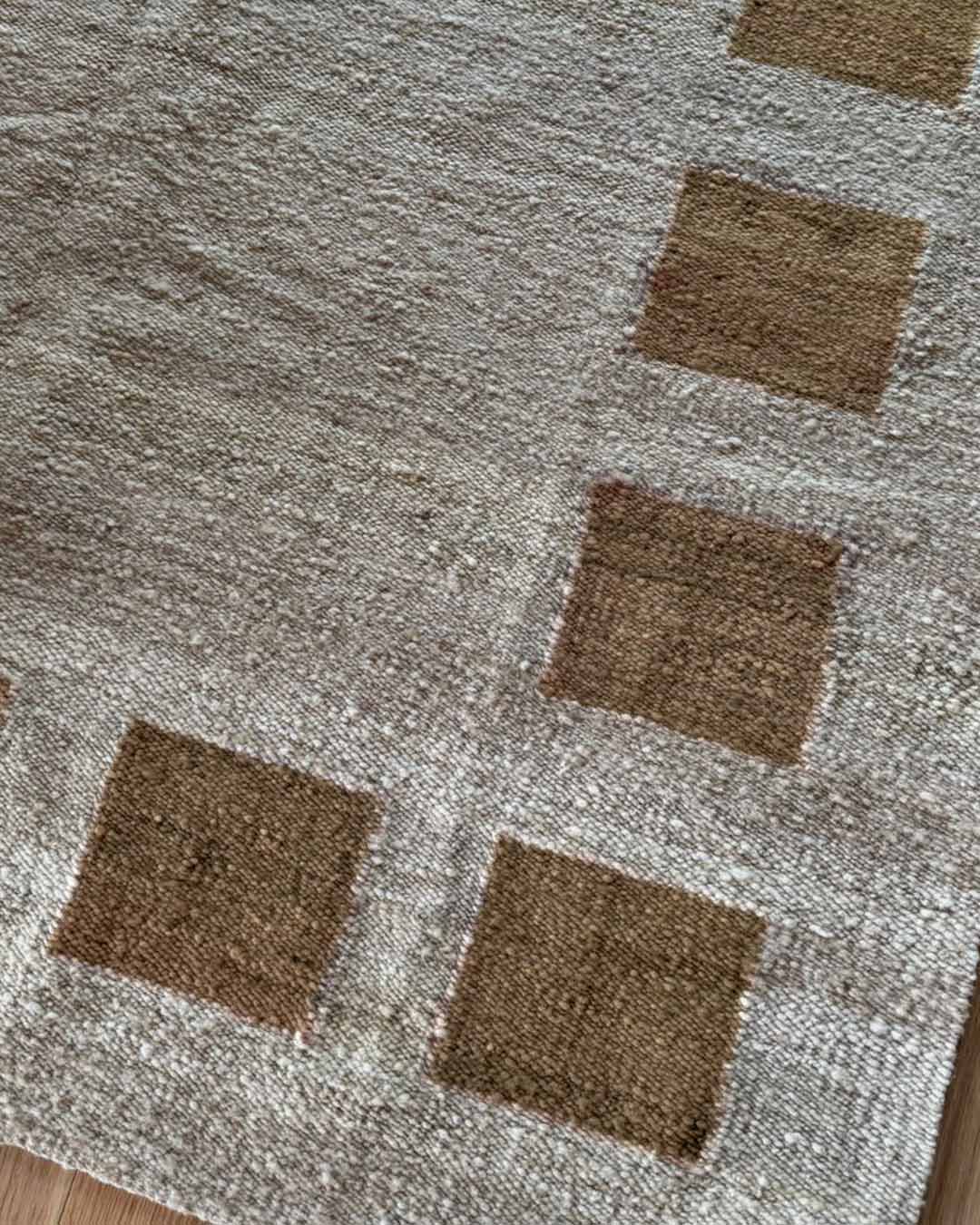
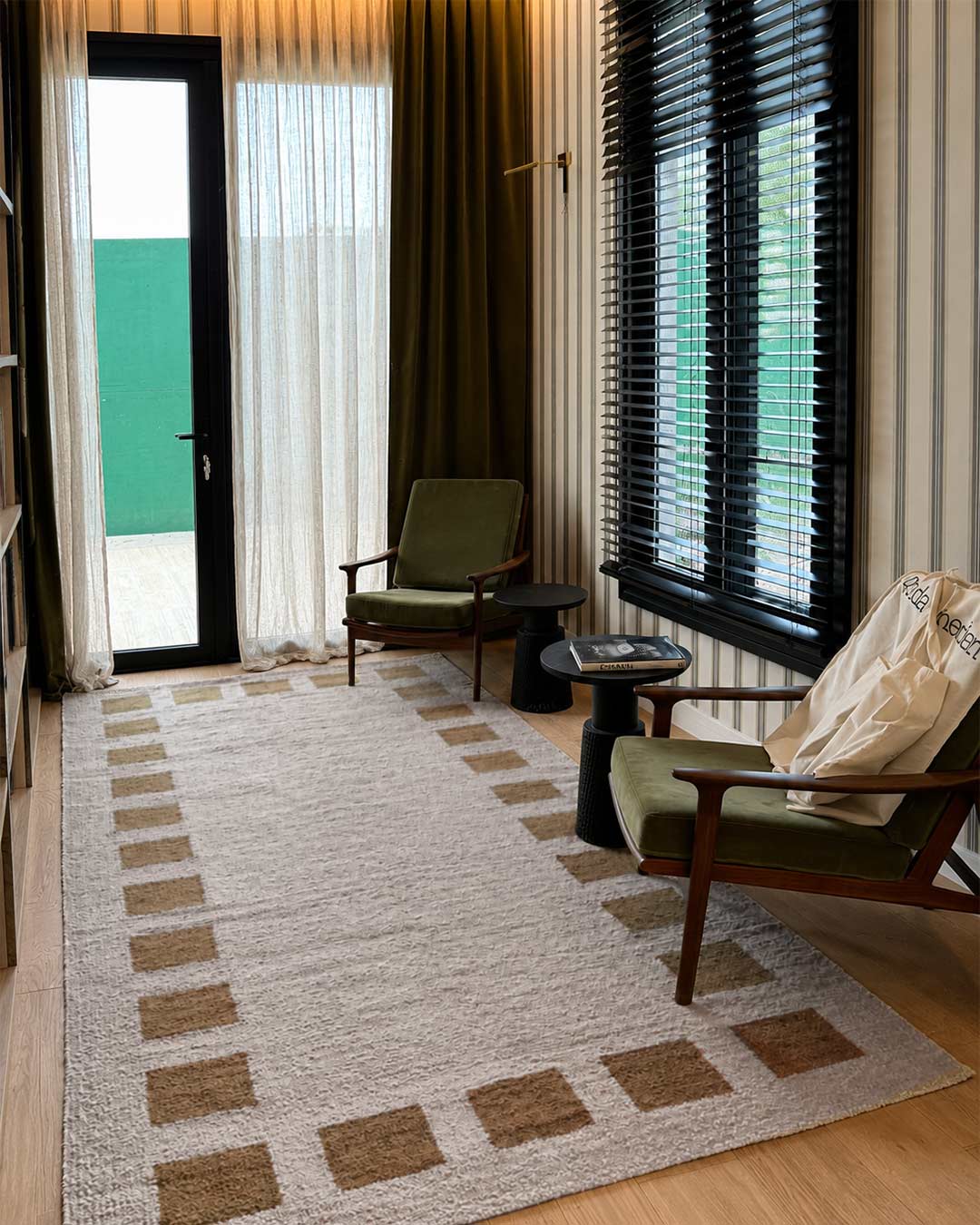
A geometric square pattern in hand-dyed sand and wood — woven in baeton technique that gives each square a subtle raised texture.
COLOR: SAND & WOOD
MATERIAL: 100% PURE SHEEP WOOL
WEAVE: BAETON WEAVE
We ship worldwide via FedEx international air freight, with door-to-door delivery in 3–6 business days depending on destination. Tracking information is provided once your order is dispatched from Argentina.
Each piece is handwoven to order. Production time ranges from 4 to 5 weeks. For urgent requests, please contact us directly to discuss availability.
Orders can be placed with a 50% deposit, with the balance due before dispatch. We accept wire transfer or major credit cards. For trade and larger orders, please contact us at trade@andinadecor.com to arrange payment terms.
Every ANDINA bed quilt can be made to your preferred size, in any of our natural undyed llama colors, with custom fringe detailing. Write to us at info@andinadecor.com to discuss your specifications, or explore our Trade Program.
Each ANDINA piece is designed to last. For care guidelines, please visit our Care & Maintenance page.
Each ANDINA piece is handwoven from natural fibers. Subtle variations in tone, texture, and final measurements are inherent to the handmade process and reflect the authenticity of its origin.
The squares are not drawn. They are woven. Each one built by alternating the position of threads across the loom, one row at a time, until the geometry emerges from the structure itself. There is no shortcut to this — it is arithmetic made physical, repeated across the full surface of the rug by a single pair of hands.
The baeton weave gives this geometric wool area rug more body than a standard flat weave. The surface has a quiet three-dimensional quality: the squares cast a faint shadow on each other, and the pattern changes depending on the direction of light and the angle from which you look at it. Close up it reads as texture. From across the room, as geometry.
Sand and Wood. The sand tone is warm and mid-range — not as pale as natural, not as saturated as camel. The wood is the deeper register: a muted brown drawn from bark and plants native to the Argentine highlands. Together they form a palette that is warm without being heavy, patterned without being graphic. The two tones are close enough in value that the geometric wool area rug sits quietly in a room rather than claiming it.
Both tones are achieved with natural dyes only. No synthetic pigments at any point in the process. Made by artisan cooperatives in remote regions of northern Argentina, on wooden looms, with hand-spun wool — the same families, the same techniques, generation after generation.
Available from 3×5 ft to 9×12 ft. For projects requiring specific proportions, custom sizes are available through our Bespoke Rugs page. Interior designers working on residential or commercial projects are welcome to contact us through our Trade Program.
| Material: | 100% Pure Sheep Wool |
|---|---|
| Construction: | Handwoven |
| Weave: | Baeton Weave |
| Color: | Sand, Wood |
| Origen: | Argentina |
| Made By: | Northern Argentina Artisans |
Behind every ANDINA piece lies the work of artisan weavers living in remote regions of northern Argentina.
Their craft, passed down through generations, is a quiet dialogue between tradition, nature, and time. Using pure, natural fibers and ancestral techniques, they create textiles that embody both cultural heritage and contemporary simplicity.
Each rug, cushion, and throw is the result of patience, skill, and respect—for the land, for the materials, and for the people who keep these traditions alive.
handwoven on a loom
Handmade with tree trunks from the area.
PURE SHEEP WOOL
100% natural, obtained from animals from surrounding farms.
hand spun
With a spindle.
NATURAL DYES
Derived from flowers, tree bark, and plants native to the area.
FAIR TRADE
Our model advances social, economic, and environmental sustainability impact through equitable trade and fair labor practices.
WOMEN Empowerment
Thanks to their hard work, our artisans have increased independence and opportunities, giving them more control over their own lives.
ancient techniques
Rich cultural traditions, skills, and processes passed down from multiple generations.
Environmentally Responsible
From obtaining the wool to the making of each piece, our entire process is focused on doing what is best for the planet.
At ANDINA, we are committed to responsible craftsmanship and environmental stewardship. Through our partnership with a local NGO, a tree is planted in northern Argentina for every order placed—contributing to reforestation and the preservation of native ecosystems.
Related pieces
You may also like…
-


Llama Bed Quilt – Oak
Multiple sizes available -
Runner Rug – Sand, Moss & Natural
Multiple sizes available -
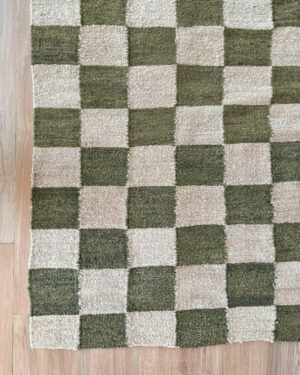
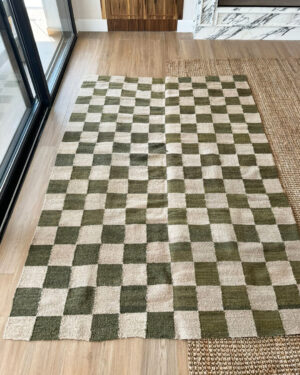
Checkered Rug – Moss & Sand
Multiple sizes available -
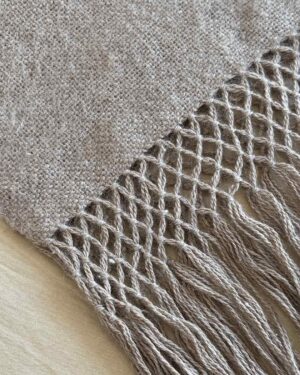
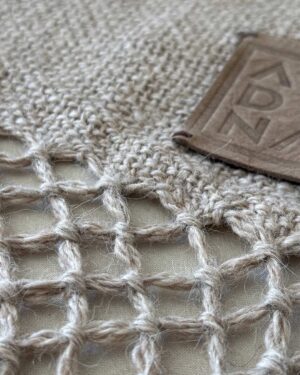
Llama Throw – Oat
Multiple sizes available
